
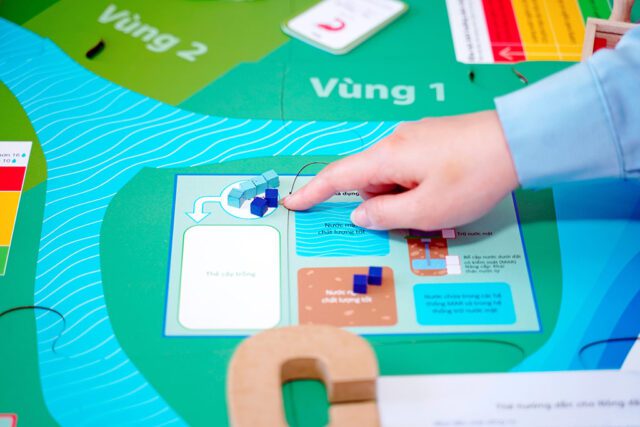
UNESCO-designated sites play an important role in promoting biodiversity conservation, sustainable development, research, education, and community participation. Across these sites, challenges such as water security, climate change, biodiversity loss, ecosystem restoration, tourism, and competing demands for natural resources are closely interconnected. Understanding these connections requires opportunities for people to explore different perspectives, consider trade-offs, and learn through practical experiences.
The 2026 Southeast Asian Biosphere Reserve Network (SeaBRnet) Survey Report highlighted the need for practical learning tools, technical training, youth engagement, and stronger regional youth networks and peer learning. Educational games offer an engaging way to explore complex environmental challenges through familiar choices and consequences. By bringing together young people from Southeast Asia, the Game Lab aims to turn local perspectives and shared experiences into an educational board game that supports learning, dialogue, and collaboration across UNESCO-designated sites.
About the Project
The Game Lab is a regional co-design programme that brings together 20 young people from Southeast Asia to collaboratively design an educational board game about UNESCO-designated sites. Through a structured programme of workshops, discussions, and game development activities, participants will explore the challenges facing Biosphere Reserves and contribute ideas, perspectives, and feedback to the game design process.
The resulting board game will serve as a practical learning and engagement tool, helping players understand the importance of UNESCO-designated sites, explore interconnected environmental and social challenges, and consider how different decisions affect people and ecosystems.
The game will explore three main themes:
- The importance of UNESCO-designated sites: Understanding their role in biodiversity conservation and sustainable development.
- Protecting UNESCO-designated sites: Exploring the interconnected challenges affecting people, ecosystems, and natural resources.
- Adapting to climate change: Considering decisions and strategies that help communities and ecosystems respond to climate change impacts.
Designed primarily for use across UNESCO-designated sites in Southeast Asia, the game will also be adaptable to different site contexts.
MAIN ACTIVITIES
Onboarding & Community Engagement Toolkit
Game Lab & Game Development
Preliminary & Field Testing
Join the Game Lab
Are you a young person interested in water, biodiversity, sustainability, and game design? The Game Lab offers an opportunity to contribute your ideas, perspectives, and creativity to the development of a regional educational board game.
Check the registration form and participation details at the link below.
Project Partners